
Community-rooted. Policy-aware. Built for implementation.
Our Approach

Jika Uluntu works at the intersection of youth development, child safeguarding, public employment, skills development, social cohesion and local economic participation.
We translate these priorities into structured programmes that people can experience, communities can shape and institutions can commission, fund and evaluate.

The approach review
Our approach brings together
- Ubuntu philosophy
- participatory arts practice
- asset-based community development
- trauma-aware facilitation, safeguarding and a systems understanding of the conditions affecting children, young people and families.
Voices of Ubuntu is the clearest expression of this approach. It occupies a deliberate developmental space between clinical care, conventional education and entertainment. It is structured, evidence-informed and trauma-aware, but it does not diagnose or treat mental-health conditions. Its role is to strengthen emotional literacy, protective relationships, regulation, agency, belonging and community capacity.

What holds the work together
Ubuntu philosophy
A person is a person through other people
Our work is rooted in Umntu ngumntu ngabantu.
Ubuntu understands a person in relationship to family, community, culture, place and future generations. It therefore shapes both the outcomes we pursue and the way we deliver programmes.
Participants are not approached as passive beneficiaries. They are recognised as people with knowledge, experience, relationships and the capacity to contribute.
Leadership, in this context, is not simply individual achievement. It is the ability to know oneself, recognise the humanity of others and act responsibly within a wider community.

Arts-Based and Participatory Methodology
Making difficult experiences speakable
Puppetry, applied drama, Forum Theatre, storytelling, movement, music, visual practice and digital storytelling allow participants to approach difficult issues through a degree of creative distance.
A puppet can carry an emotion before a young child is ready to speak directly. A character can hold a conflict without forcing a participant to disclose a personal experience. A scene can be paused and examined. A story can be rewritten so that a different response is rehearsed before it is attempted in everyday life.
The arts are therefore not an entertainment layer added to the programme. They are structured tools for participation, reflection, communication and social learning

Embodied and Cultural Pathways
Not every experience can be processed through words
Across cultures and generations, people have used movement, rhythm, music, story, visual art, ritual, play and nature to express experience, mark change and reconnect with others.
Voices of Ubuntu brings these familiar practices into structured, safeguarded processes that help participants notice stress, find expression, settle, make meaning and reconnect. The approach can be adapted for youth development, GBVF prevention, community dialogue, frontline-care resilience and workplace wellbeing.

Asset-Based Community Development
Communities are holders of capability, not empty spaces waiting for solutions
We identify needs, but we do not define people or communities only by what they lack.
We also look for the assets already present:
- lived knowledge and experience;
- family and community relationships;
- cultural practices and language;
- local leadership;
- creative skills and talents;
- schools, faith communities and local organisations;
- informal systems of care;
- public facilities and community spaces;
- and people who can be trained and employed to carry the work forward.
Facilitators do not arrive with a fixed answer. They help participants understand the challenge, recognise the assets available and develop responses suited to the local context.
This is how Voices of Ubuntu achieves adaptation without dilution: stories, language, cultural references and creative forms may change, while the safeguarding standards, Ubuntu orientation, participatory method, ethics and quality process remain consistent.

A Systems and Socio-Ecological Approach
People cannot be separated from the environments around them
Challenges such as violence, unemployment, food insecurity, grief, substance use, caregiver strain, exclusion and limited access to services often occur together and reinforce one another.
A child’s withdrawal, aggression or difficulty concentrating may be connected not only to what is happening within the child, but also to relationships at home, peer experiences, school culture, household pressures, community conditions and the responsiveness of public institutions.
We therefore consider the wider system surrounding the person:
- children and young people;
- parents, caregivers and families;
- educators and practitioners;
- schools and ECD centres;
- households and peer groups;
- community structures;
- service providers;
- and public institutions.
This allows Jika Uluntu to connect youth development with safeguarding, psychosocial wellbeing, household resilience, public employment, skills development and institutional capacity.

Public Employment as Community Capability
The people delivering the programme are part of the impact
Through EPWP work opportunities, funded projects and paid institutional commissions, Jika Uluntu recruits, prepares and employs local people to contribute to socially useful programme delivery.
Depending on the programme, this may create paid roles for:
- facilitators and Ubuntu Mentors;
- performers, actors and puppeteers;
- Assistant Jokers and Jokers;
- programme assistants and coordinators;
- community mobilisers;
- administrators and logistics teams;
- storytellers and writers;
- and media and documentation practitioners.
This creates two forms of value at the same time:
- children, schools, workplaces and communities receive structured programmes; and
- local people gain income, supervised experience, practical skills and pathways into further earning opportunities.
The people who deliver the work are part of the impact the work creates.

Safeguarding and Trauma-Aware Facilitation
Safety is built into the method
Safeguarding begins before participants enter the room.
Every engagement considers:
- informed and voluntary participation;
- child-protection responsibilities;
- accessibility and language;
- emotional and physical safety;
- confidentiality boundaries;
- possible disclosures;
- referral and escalation pathways;
- photography and use of participant stories;
- facilitator roles;
- and the responsibilities of the host institution.
Facilitators are prepared not only in what they will present, but in how they will respond if a participant becomes activated, withdraws, dominates the space or raises a concern requiring further support.
They are trained to notice what is happening in the room, pace the process, protect dignity, maintain professional boundaries and know when to pause, contain, refer or adapt an activity.
Voices of Ubuntu’s developmental role is to strengthen protective relationships, emotional literacy, regulation, agency, belonging and community capacity. Where additional support is needed, safeguarding and referral pathways connect participants with the appropriate response.
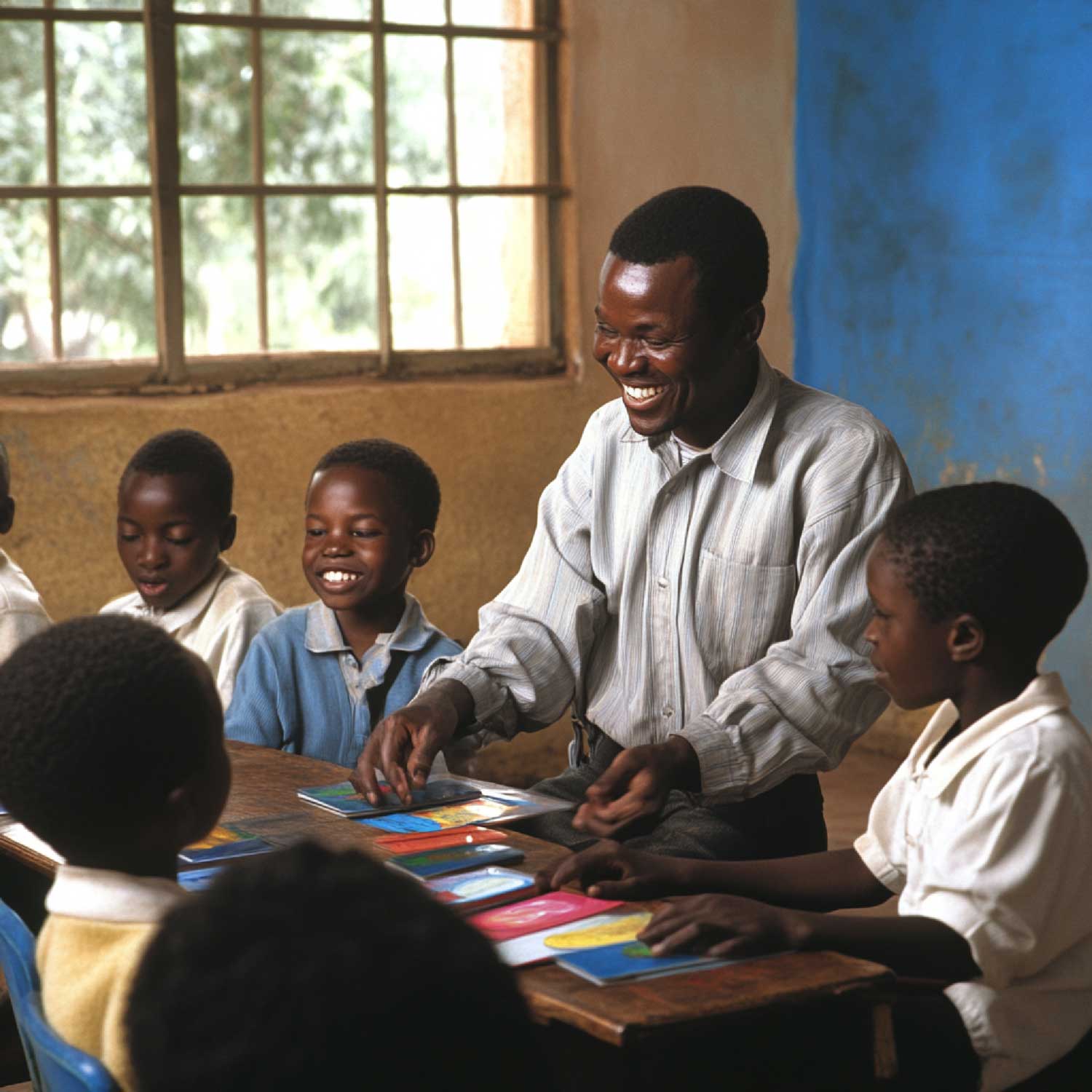
How the Approach Becomes Practice
A repeatable process, adapted to every setting
Listen to the client, participants and wider context. Understand the visible challenge, the pressures surrounding it, the strengths already present and the change being sought.
Select the appropriate programme stage, methods, language, contact time and level of participation.
Brief facilitators and stakeholders, confirm safeguarding responsibilities, rehearse the creative process and organise the practical conditions required for safe delivery.
Create, perform, reflect, participate and practise different responses through an appropriately facilitated arts-based process.
Debrief the delivery team, capture participation and feedback, record emerging themes and report responsibly without overstating short-term results.
Review what has continued, identify obstacles, support referrals where needed and agree on the next appropriate step.
One Method. Many Applications.
The Embodied Pathways section currently says the approach can be adapted to different settings, but the page does not show visitors what that means in practice.
Adaptation Without Dilution
The challenge shapes the programme. The community helps shape the response. The methodology holds the process.
What adapts
What remains constant
Tell us what is happening in your setting
Every engagement begins with listening not with a pre-set script.
Tell us who you want to reach, the challenge you are addressing, the environment in which you work and the change you hope to support. We will help identify the most appropriate Voices of Ubuntu stage, combination of methods, contact time and partnership model.